
💫Jane’s Success Story
From “I Just Felt Old” to Moving With Confidence Again
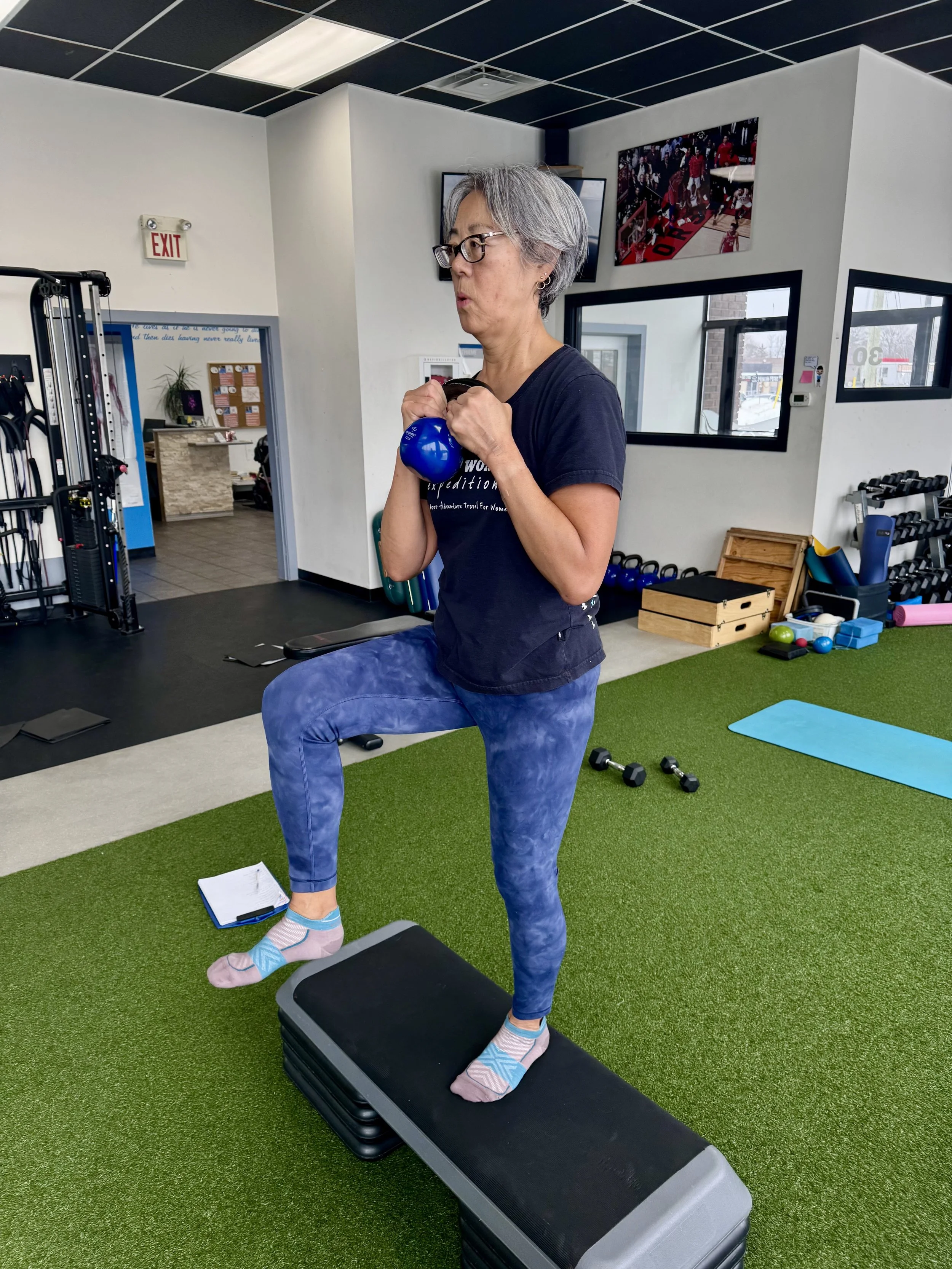
Before Training: Accepting Limits She Never Chose
Before Jane walked through our doors, movement had quietly become something she managed rather than enjoyed.
At 61 years old, after decades working as a structured, detail-oriented IT project manager, much of her adult life had been sedentary. She had never considered herself athletic — in fact, she laughs that she was usually the last person picked in gym class. Add scoliosis and a hip replacement to that history, and over time she began to internalize a belief that many people carry but rarely say out loud: this is just what aging feels like.
During COVID, she did what many motivated adults do. She found YouTube workouts, bought some weights, and committed. The endorphins were there. Some strength improved. But there were limits — limited load, limited mobility, limited confidence. Eventually, braces became part of her routine. A knee brace for pickleball and ballroom dancing. A tensor for tennis elbow. Careful movement. Strategic avoidance.
Looking back, she says it simply: she just felt old.
At 61 years old, she assumed this was simply the next chapter.
The Turning Point: Realizing Her Body Needed Something Different
The real shift began not with worsening pain, but with awareness. At a yoga workshop designed specifically for people with scoliosis, Jane noticed how many modifications were required to accommodate her structure. That moment planted a seed. Generic workouts weren’t designed for her body. They weren’t designed for a hip replacement, spinal curvature, or decades of compensatory patterns.
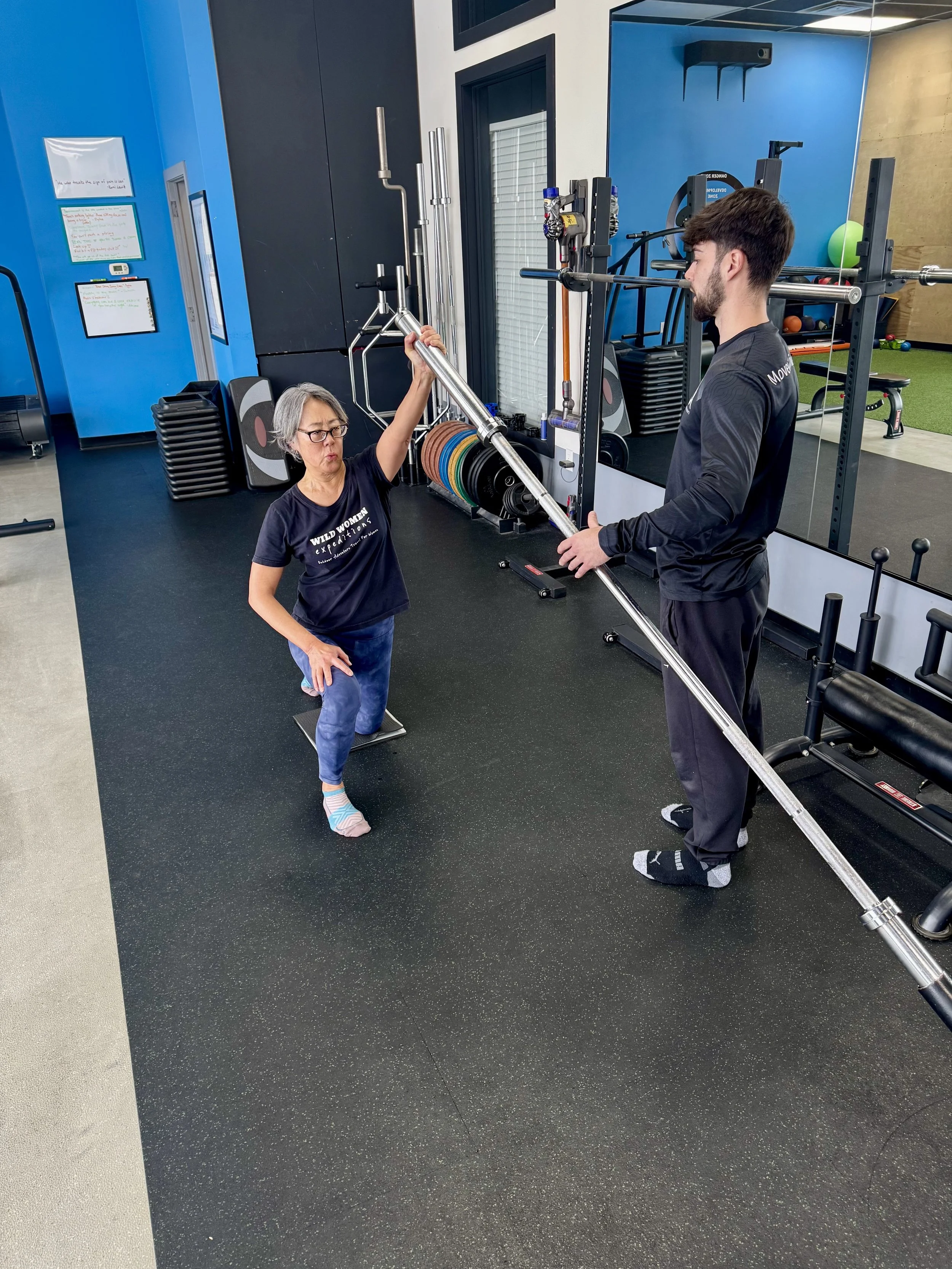
She began searching for something different. Not aesthetics. Not bootcamps. Not intensity for intensity’s sake. She searched for functional fitness — something that would translate to real life.
That search led her to Qi Movements.
What immediately stood out wasn’t machines or heavy weights. It was the assessment. Instead of jumping into lifts, we looked at how she balanced, how she hinged, how her ribs moved when she breathed, how her feet interacted with the floor, how force traveled through her body. It was detailed. It was different. And it made sense.
For the first time, she felt like someone was working with her body — not asking her to fit into a template.
Trusting the Process: Why It Started With Breathing
In the beginning, Jane wondered when the “real” workout would start. The first sessions were heavy on breathing drills, positioning work, controlled warm-ups, and slow, precise movements. She admits she thought, when do we start lifting weights?
What she didn’t realize at the time was that this was the real work.
Breathing wasn’t simply relaxation — it was restoring rib cage position, reducing unnecessary spinal tension, and teaching her deep core to support her pelvis and SI joint properly. By improving pressure management inside the trunk, her hips and shoulders could move with less compensation. Instead of chasing strength on top of dysfunction, we reorganized her foundation.
As weeks progressed, layers were added thoughtfully. Loaded hinges retrained her posterior chain. Split-stance and single-leg work restored lateral stability that directly influenced her knee pain. Controlled tempo lifts built resilience in joints that had been guarded for years. Sled pushes and supported hangs challenged full-body integration safely. Training barefoot reconnected foot mechanics to hip and core stability.
Nothing was random. Each phase built on the last. Strength was introduced only after stability and sequencing improved. And because of that order, the strength she gained stuck.
The Power of Precision
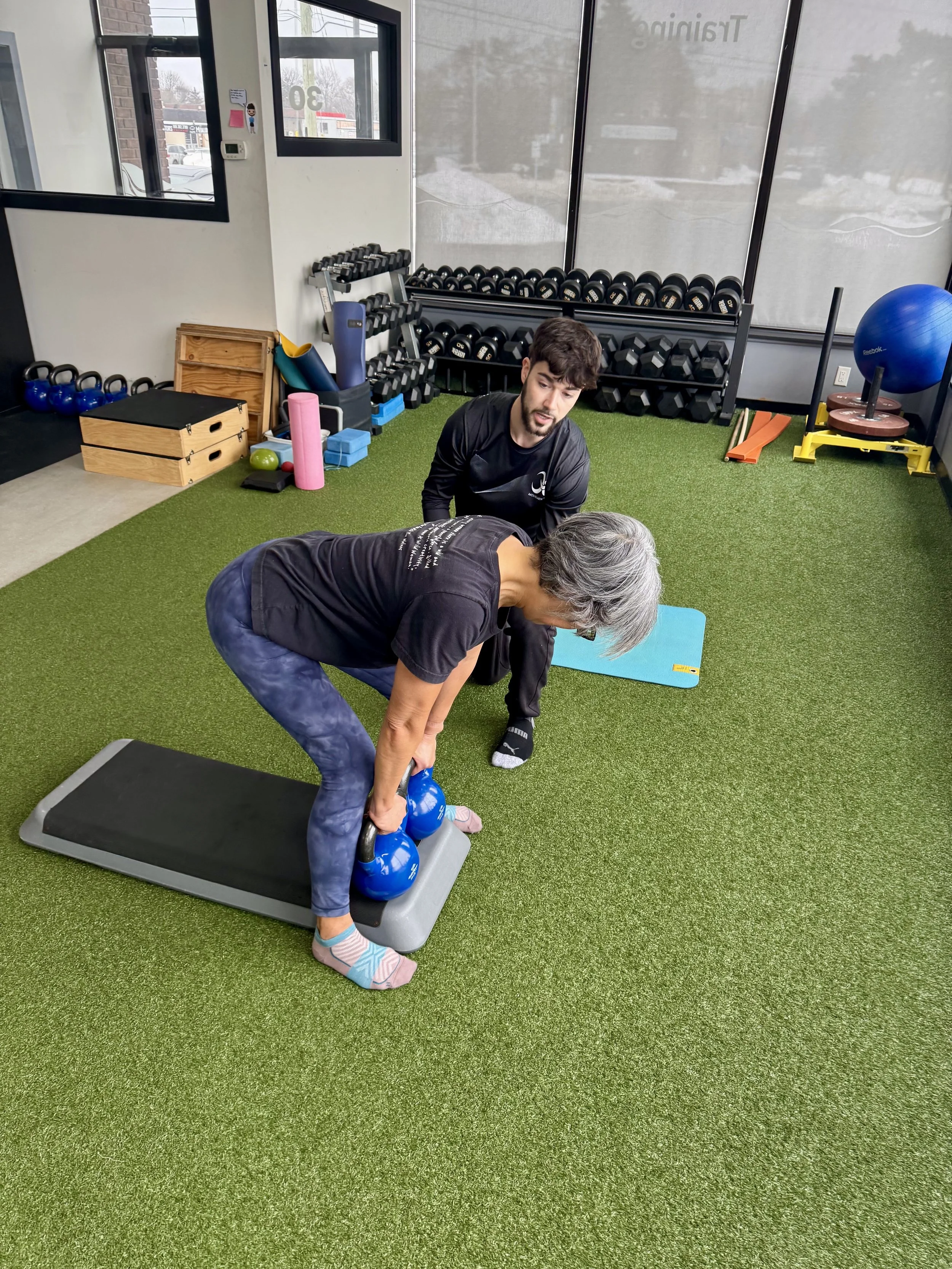
One of the things Jane values most is the detail. Subtle adjustments to foot pressure. Gentle corrections of rib position. Engagement cues for shoulder blades. Tiny tweaks to hip alignment.
To some, that level of precision might feel overwhelming. For Jane, it felt protective.
She didn’t want to “just get stronger.” She wanted to get stronger correctly.
By improving how force travels from the foot through the ankle, knee, hip, pelvis, rib cage, and shoulder, she wasn’t simply building muscle. She was improving sequencing and coordination. That is why her right shoulder — long affected by scoliosis — no longer drops during ballroom dancing. That is why her dance partners comment on her improved frame. That is why her pickleball serve feels more controlled and less rotationally chaotic.
And slowly, almost quietly, the braces disappeared.
The knee brace she once relied on for lateral stability was no longer necessary. The elbow support became irrelevant. The body that once felt fragile began to feel capable.
Why Co-Care Made All the Difference
A defining part of Jane’s progress has been the collaboration between training and physiotherapy. During one session, her trainer noticed a strength discrepancy and performed a NeuroKinetic assessment. When Jane placed her hand over her hip replacement scar — without pressing, simply resting it there — her strength output immediately changed. That scar, long healed externally, was still influencing neurological signaling.
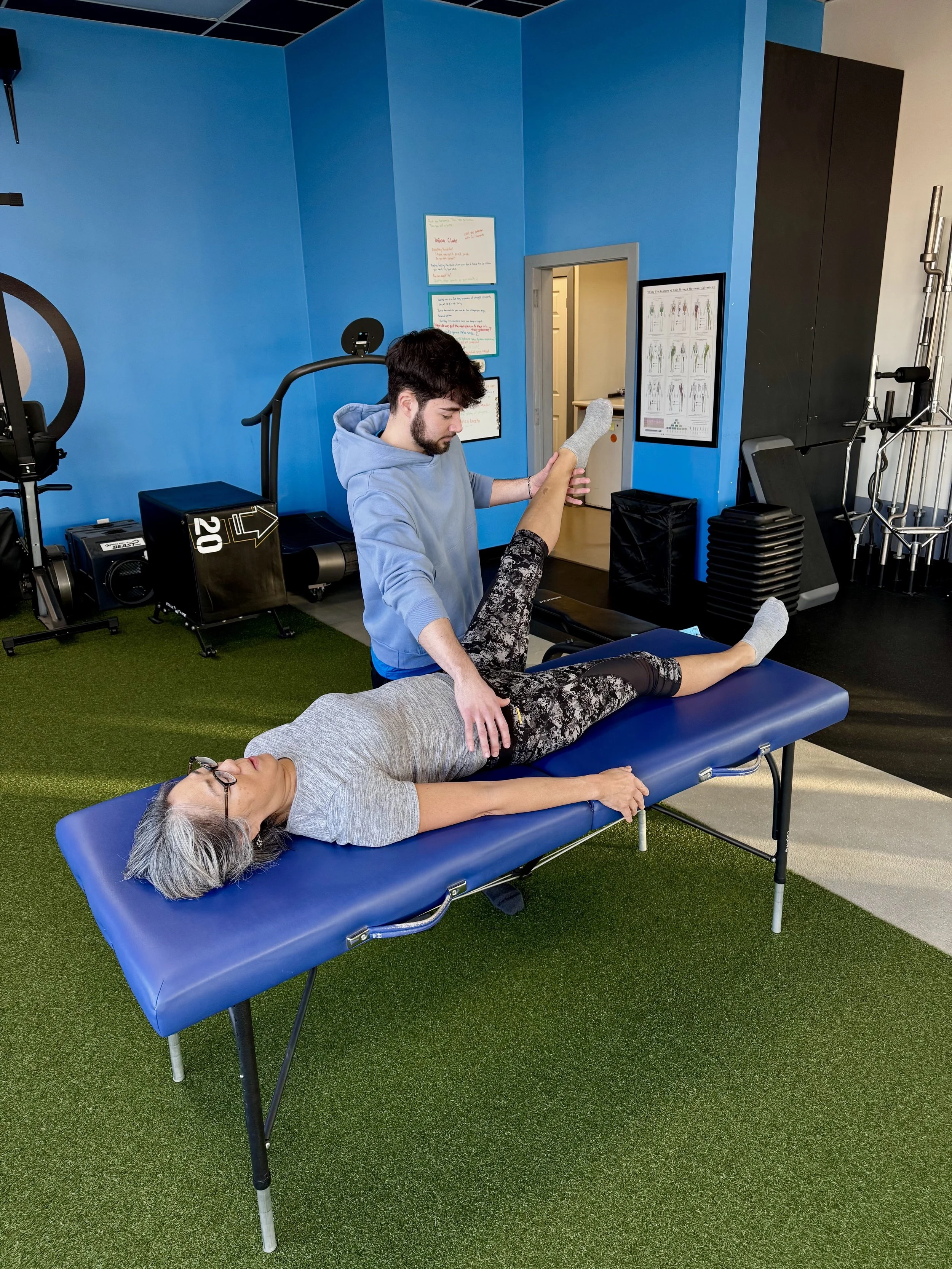
That insight led to deeper integration with iMove Physiotherapy. What makes this collaboration powerful is communication. Her trainer understands what her physiotherapist is addressing. Her physiotherapist understands how she is loading in the gym. Information flows both ways. If something presents in physio, it is reinforced in training. If something appears in training, it is addressed in treatment.
Instead of isolated care, Jane receives integrated care. Structural, neurological, and strength-based work support each other. Progress compounds rather than resets.
Feeling Younger — Because She Moves With Confidence
When asked how she feels now compared to when she started, Jane doesn’t hesitate.
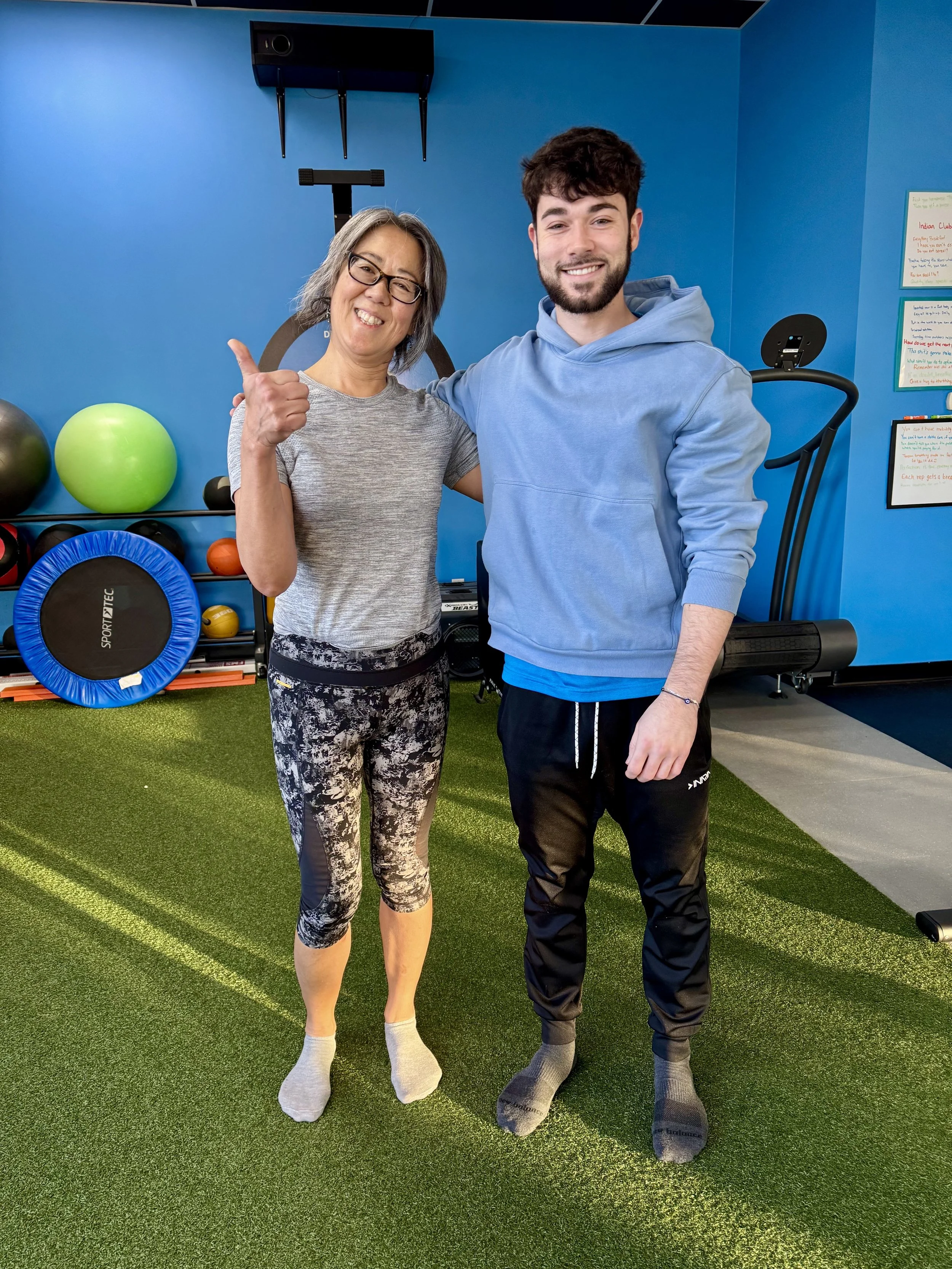
Now, at 62, she feels younger than she did at 61.
Not because she is chasing youth. Not because she is reckless. But because she is confident.
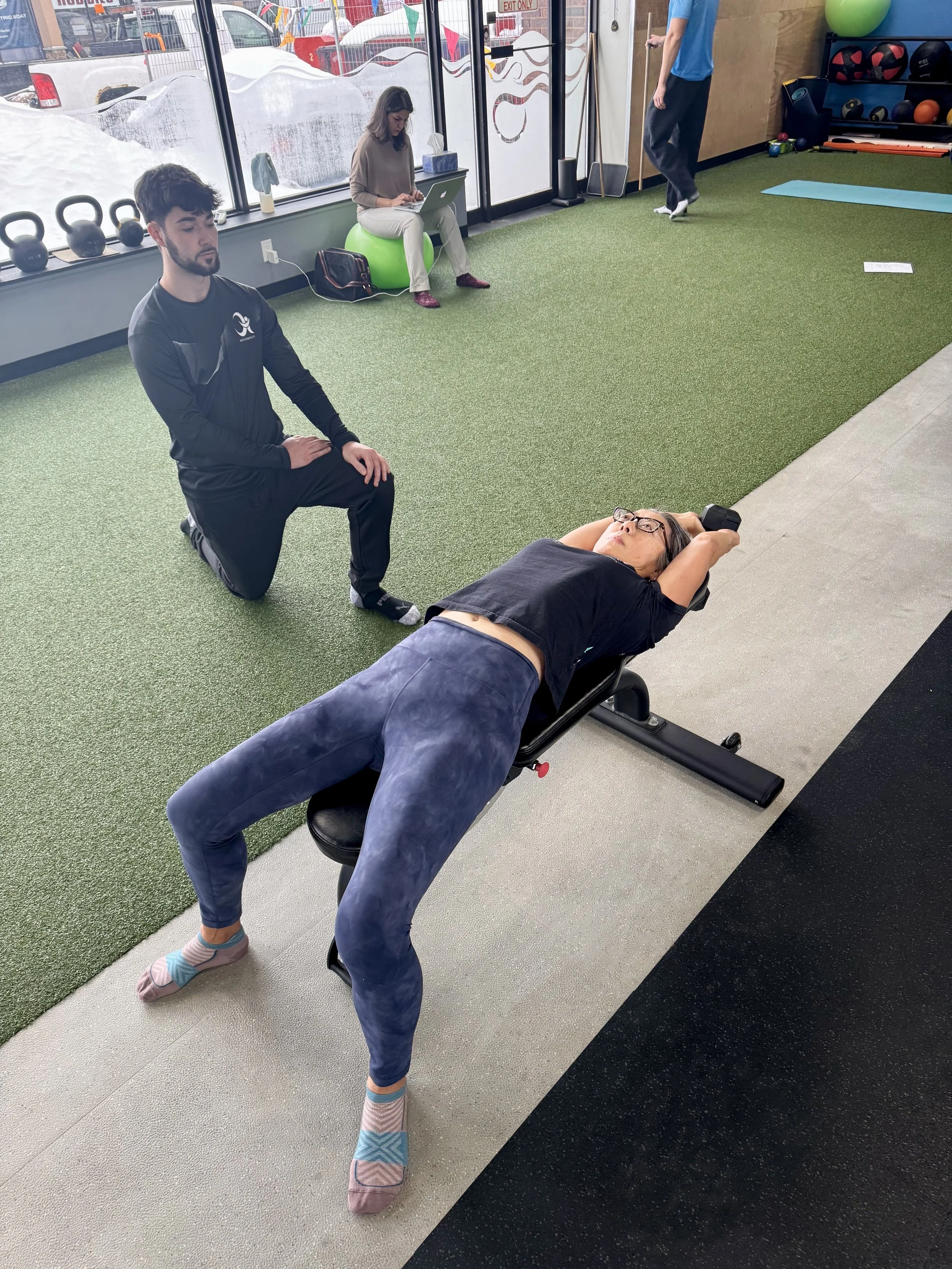
She shovels snow without back pain. She lifts heavy gardening bags using a proper hinge pattern without thinking about it. She applies breathing techniques when she feels tension creeping in. She cycles many kilometers again. She hikes longer distances. She has even started rock climbing.
But perhaps the most powerful moment came when she was asked, “What’s next?”
Her answer was simple.
She loves to travel. And now, she said, this gives her freedom. She wants to do hiking trips she never would have considered before — extending herself to walk 15 or 20 kilometers a day. She wants to return to cycling trips she used to do decades ago. She wants to keep putting this new body into real-world experiences.
This isn’t about training for the sake of training.
It’s about building a body that allows her to say yes to life.
These aren’t small changes. These are identity shifts.
She no longer moves like someone protecting herself from pain. She moves like someone building capacity.
A Life Reclaimed After 61
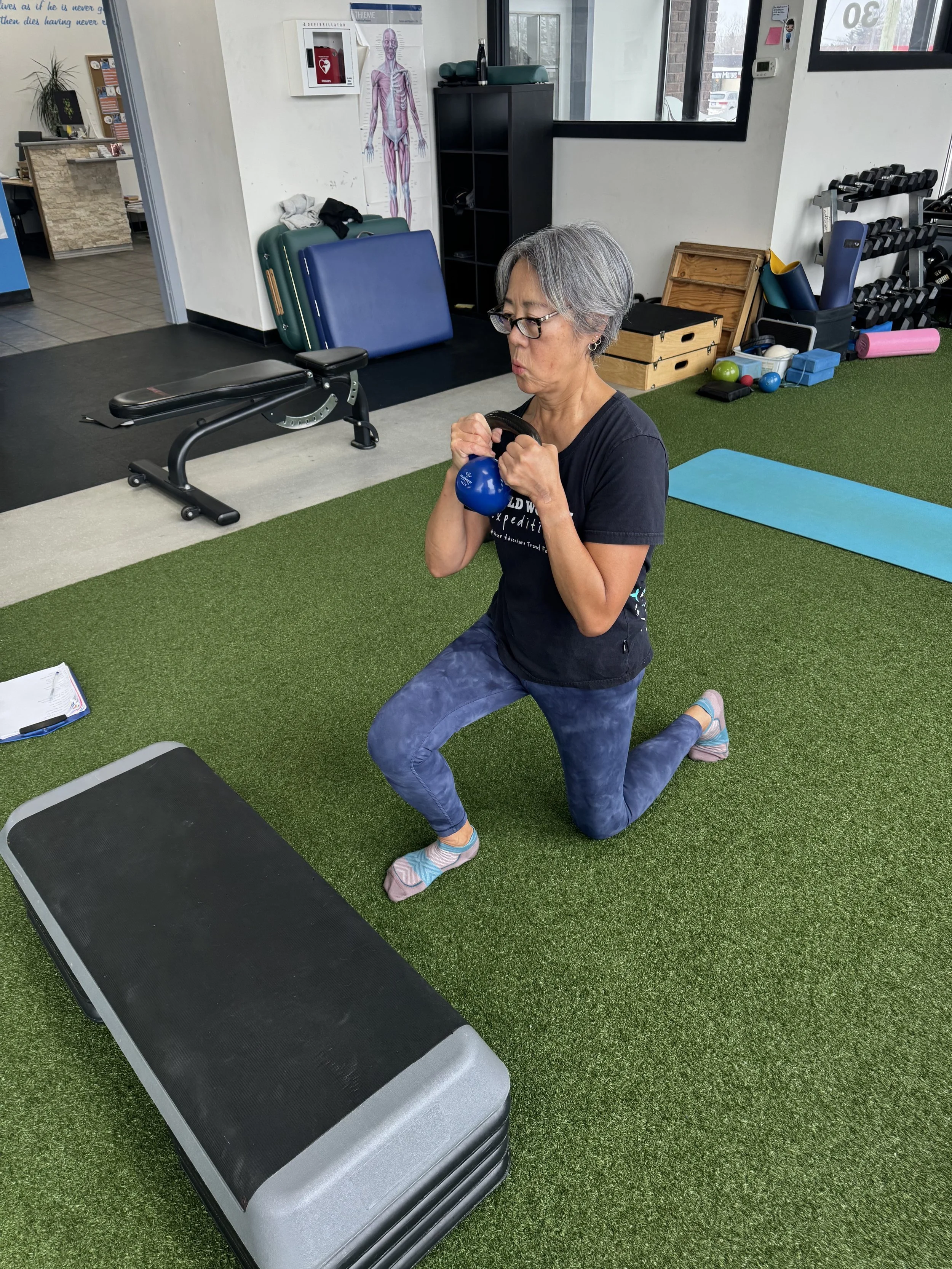
Jane began this journey at 61 years old, after decades behind a desk and years of believing certain limitations were permanent. Now, at 62, she is living proof of what is possible when consistency meets intelligent coaching and integrated care.
Because of her open mind, her effort, and her willingness to embrace detail, she now lives with more freedom than she assumed possible at this stage of life.
This was not luck.
It was earned.
Jane’s story is proof that aging is not a straight downward slope. With intelligent programming, precise coaching, progressive strength, and integrated care, the body can reorganize, adapt, and thrive far beyond expectation.
Jane, we are deeply grateful for your consistency, your curiosity, and your trust. You show up. You apply the details. You stay open to correction. You put in the work. Watching you continue to progress is a privilege.
We truly value you. We love seeing you expand what you believe is possible.
And we are so proud of you.
Because if this is what happens starting at 61…
The future looks strong.
Inspired by Jane’s story? Your journey can start here.
Our 3-Session Core Transformation Program is designed to help you rebuild strength, restore confidence, and move without limitation — safely and intelligently.
Visit qimovements.com to book your free discovery call and see if this program is right for you.
Yours in wellness,
Brien & Dre
Qi Movements – Move well. Live well.™