
Why We Train Barefoot
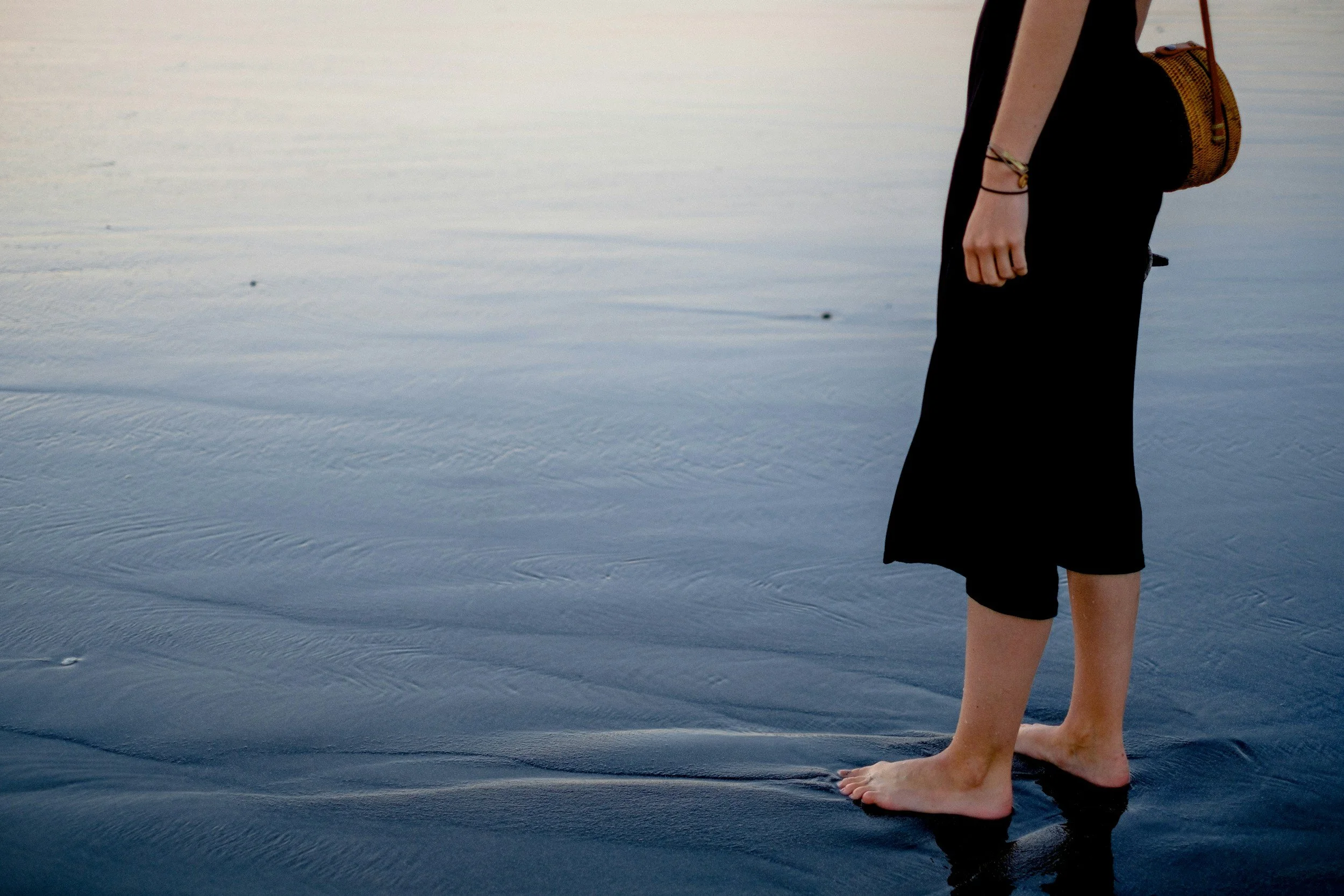
One of the first things people notice when they come into Qi Movements is that we train barefoot.
At first, many people are surprised.
"Is this safe?"
"Shouldn't I be wearing my running shoes?"
"What if I need more support?"
They're great questions because, for most of our lives, we've been taught that bigger shoes, more cushioning, and more support are better for our feet. It's what many of us have believed for years.
But what if the opposite is true?
What if our feet don't need more support?
What if they simply need more opportunity to do the job they were brilliantly designed to do?
Your Feet Were Designed to Move
Your feet are one of the most remarkable pieces of engineering in the human body.
Each foot contains 26 bones, 33 joints, over 100 muscles, tendons, and ligaments, and thousands of nerve endings that constantly send information to your brain about where your body is in space.
They aren't just there to hold you up.
They're your foundation.
Every step you take influences your ankles, knees, hips, pelvis, spine, shoulders, and even your neck. Your feet are the first link in the kinetic chain.
When your feet move well, your entire body has the opportunity to move well.
When they don't, compensation patterns begin to develop throughout the body.
That's why we say movement starts from the ground up.
The Three Arches
Most people think of the foot as having one arch.
It actually has three.
Together, these arches create a dynamic spring that absorbs force, stores energy, and helps propel us forward with every step.
They're designed to compress, expand, rotate, and adapt to the ground beneath us.
But if the foot becomes stiff, overly supported, or unable to move naturally, those arches can't do the job they were designed to do.
Your Toes Matter More Than You Think
Most of us never think about our toes—until they stop working well.
The toes aren't just along for the ride.
They're deeply connected to the rest of the body.
In NeuroKinetic Therapy®, we recognize fascinating relationships throughout the kinetic chain.
The big toe has a strong relationship with the adductors and the pelvis.
The little toe has a strong relationship with the abductors and the outside of the hip.
The heel helps organize the entire posterior chain—from your calves and hamstrings all the way up your back.
Healthy feet create healthy movement.
When the feet lose function, the rest of the body often has to compensate.
Your Feet Are Meant to Feel the Ground
The soles of your feet are packed with sensory receptors.
Every time you stand barefoot, your brain receives thousands of pieces of information about balance, pressure, stability, and movement.
That information allows your nervous system to make constant adjustments to improve posture and coordination.
Shoes, especially thick, highly cushioned shoes, reduce much of this valuable feedback.
It's a little like trying to type while wearing thick winter gloves.
You can still do it, but not nearly as well.
Support vs. Dependence
Support isn't bad.
There are absolutely times when we need it.
After surgery.
Following certain injuries.
Specific medical conditions.
Support can be an incredible tool.
But there's an important difference between temporary support and lifelong dependence.
If every joint in your body became weaker from lack of use, we'd strengthen it through progressive exercise.
Why should our feet be any different?
Our goal isn't to take support away from people who genuinely need it.
Our goal is to gradually help the body become capable of supporting itself again whenever possible.
The Gait Cycle: We Need All Three Movements
One of the biggest misconceptions is that pronation is bad.
It's not.
A healthy walking pattern requires three phases.
Neutral provides stability.
Pronation allows the foot to absorb shock and adapt to the ground.
Supination creates a rigid lever so you can push off efficiently.
Every healthy step moves through all three.
When we try to eliminate pronation or overly restrict the natural movement of the foot with rigid orthotics, the rest of the body has to find another way to absorb force.
The compensation simply moves somewhere else.
Our goal isn't to eliminate movement.
It's to restore healthy movement.
Why We Aren’t Meant to Wear Shoes All Day
Think about how much time most of us spend in shoes.
From the moment we leave our bed until we climb back into it.
Sometimes 12 to 16 hours every single day.
Our feet rarely get the opportunity to move naturally.
Whenever possible, spend time barefoot.
Around the house.
In the backyard.
On the grass.
On the beach.
Give your feet opportunities to move the way they were designed.
If standing barefoot feels uncomfortable or unstable, don't see that as bad news.
See it as valuable information.
It's your body showing you an opportunity for improvement.
Big shoes and rigid orthotics can sometimes mask dysfunction without ever addressing the root cause.
Pain or instability isn't always something to hide.
Often, it's your body's way of asking for better movement.
The Problem with Narrow Shoes
Many modern shoes have narrow toe boxes that squeeze the toes together.
But your toes are supposed to spread.
A wider foot creates a more stable foundation.
Strong, mobile toes improve balance, posture, force production, and stability.
Many minimalist shoes simply allow your foot to be a foot.
They typically have a wider toe box, a flexible sole, and minimal heel lift, allowing the foot to move more naturally.
That doesn't mean everyone should immediately throw away every pair of shoes they own.
It simply means we should start giving our feet more opportunities to do their own work.
The Problem with Narrow Shoes
Many modern shoes have narrow toe boxes that squeeze the toes together.
But your toes are supposed to spread.
A wider foot creates a more stable foundation.
Strong, mobile toes improve balance, posture, force production, and stability.
Many minimalist shoes simply allow your foot to be a foot.
They typically have a wider toe box, a flexible sole, and minimal heel lift, allowing the foot to move more naturally.
That doesn't mean everyone should immediately throw away every pair of shoes they own.
It simply means we should start giving our feet more opportunities to do their own work.
A Word About Flip-Flops
Here's something most people have never considered.
As we walk, the toes of the front foot should begin to extend as the leg swings forward through the gait cycle. This extension isn't just about the foot—it helps organize the entire anterior chain of the body, creating a line of tension that travels through the shin, quadriceps, hip flexors, abdominal wall, chest, and all the way up to the muscles at the front of the neck.
Flip-flops often disrupt this natural sequence. Instead of allowing the toes to extend, many people subconsciously grip the sandal with their toes to keep it from falling off. This places the toes into flexion at the exact moment they should be extending, altering the mechanics of the entire anterior chain.
David Weinstock, the creator of NeuroKinetic Therapy®, jokingly refers to flip-flops as "neck fuckers" because of the effect they can have on movement patterns. It's a memorable phrase, but there's an important lesson behind it.
If you spend much of the summer in flip-flops and have persistent neck tension that never seems to go away, your footwear may be one piece of the puzzle worth exploring.
What About Big Cushioned Shoes?
There's no question that highly cushioned shoes can make running feel more comfortable.
Originally, shoes like Hokas were developed to help people returning from surgery or rehabilitation reduce impact while recovering.
Today, however, many runners wear maximal-cushion shoes because they reduce discomfort.
The challenge is that reducing pain doesn't always solve the movement pattern that created it.
A friend once told me that running always hurt.
He switched to Hokas, and the pain disappeared.
The next time I saw him, he was walking on crutches after suffering a significant leg injury.
Did the shoes cause the injury?
Not necessarily.
But they may have quieted the warning signal without correcting the underlying compensation pattern.
Pain is often a messenger.
Our goal shouldn't simply be to silence the messenger.
Our goal should be to understand why it was speaking in the first place.
Why We Train Barefoot at Qi Movements
Every exercise we teach begins with the feet.
Whether we're doing a squat, a row, a press, or a lunge, we're coaching the body from the ground up.
One of our favourite exercises is the lunge because it trains both feet simultaneously.
The front foot learns to create a stable tripod.
The back foot learns to extend through the toes.
Both feet strengthen all three arches.
The ankles, knees, hips, pelvis, core, shoulders, and neck all learn to work together as one integrated system.
We don't separate upper body from lower body.
The body doesn't move that way.
Every exercise is a full-body exercise.
No matter what movement we're coaching, we're always paying attention to the feet.
When foot function improves, posture often improves.
Compensation patterns begin to dissolve.
Movement becomes more efficient.
Pain frequently decreases—not because we're chasing symptoms, but because we're restoring function.
That's not just pain relief.
That's pain prevention.
Start Slowly
If you've spent decades in supportive shoes, don't expect your feet to become strong overnight.
Just like you wouldn't walk into a gym and deadlift 300 pounds on your first day, you shouldn't switch into minimalist shoes and immediately run 15 kilometres.
Start with five minutes.
Take a short walk.
Spend more time barefoot around your home.
Allow your feet to gradually adapt.
Small, consistent improvements create remarkable long-term change.
Our Philosophy
This isn't about saying shoes are bad.
Shoes have an important place.
Steel-toed boots protect workers.
Hiking boots protect us on rough terrain.
Athletic shoes have their role.
The question isn't whether shoes are good or bad.
The better question is this:
Have your shoes become so supportive that your feet have stopped doing the job they were beautifully designed to do?
At Qi Movements, we're here to help—not to judge.
Sometimes that means gently challenging beliefs we've all been taught.
Pain is often a messenger, not the enemy.
Supportive shoes, orthotics, and extra cushioning can sometimes quiet the messenger, but they don't always address whythe message appeared in the first place.
Our goal isn't simply to make discomfort quieter.
Our goal is to help your body move so well that it no longer needs to send the signal.
We believe the body has an incredible ability to adapt, heal, and move well when we give it the opportunity.
It all starts with the foundation beneath us.
Better feet lead to better movement.
Better movement leads to a better life.
Let's build a stronger foundation together. Book your free Discovery Call.
Yours in wellness,
Brien
Move Well. Live Well.™