
The Six Fundamental Human Movement Patterns
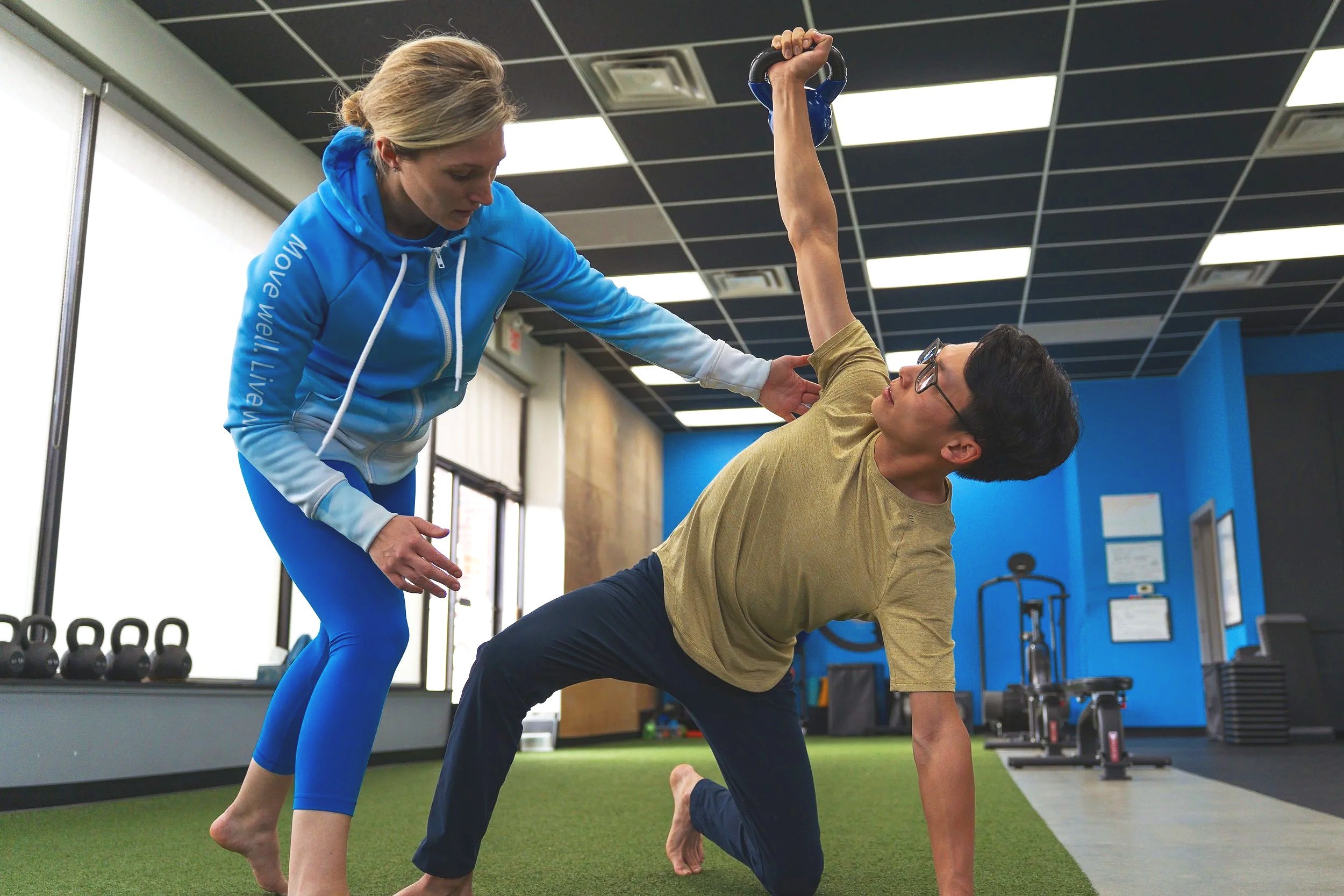
There comes a point in life where exercise stops being about chasing calories…
and starts becoming about preserving freedom.
Freedom to get down on the floor.
Freedom to carry groceries confidently.
Freedom to travel, hike, play with your children or grandchildren, and move through life without pain becoming the center of your decisions.
For many adults, that moment begins after 45.
Your body starts speaking louder.
Recovery changes.
Old injuries begin resurfacing.
Stiffness increases.
Energy fluctuates.
And this is where most people make a major mistake.
They think they need more intensity.
But often, what they actually need is better movement.
At Qi Movements, our philosophy is simple:
You should not just train harder.
You should train smarter.
That’s why our entire coaching system is built around the fundamental human movement patterns your body was designed to perform.
The Six Fundamental Human Movement Patterns
At Qi Movements, we focus on six foundational patterns:
Push
Pull
Lunge
Hinge
Squat
Carry
These are not just gym exercises.
These are the patterns that support real life.
They help you:
stand up confidently
climb stairs
stabilize your spine
prevent falls
generate force safely
carry objects
maintain independence
move through life with resilience
When these patterns become weak, unstable, painful, or dysfunctional, life becomes harder.
That’s why we rebuild them intentionally.
We Teach Movement From the Inside Out and Bottom Up
One of the things that sets Qi Movements apart is that we do not skip steps.
Most people are rushed into exercises their body is not prepared for.
At Qi Movements, we believe:
breathing comes before bracing
control comes before intensity
alignment comes before load
movement quality comes before ego
We teach movement from the inside out and the bottom up.
That means we first establish:
breathing mechanics
spinal alignment
pelvic positioning
rib cage control
foot stability
joint positioning
tension management
Before we ask the body to produce force.
Because intensity without stability is simply compensation.
Push: Building Strength That Transfers to Life
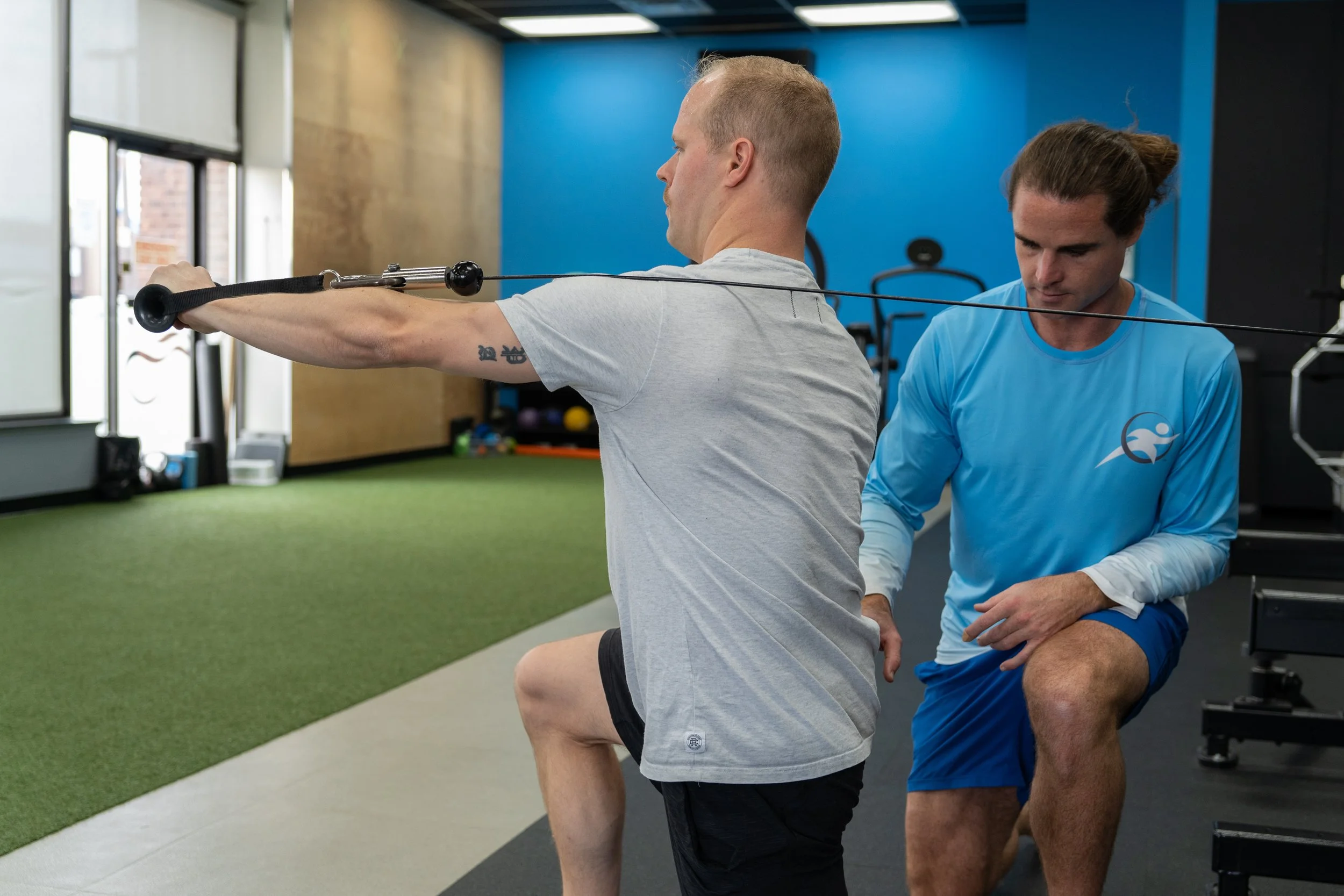
Pushing movements train your ability to create force away from the body.
This matters more than people realize.
Pushing mechanics support:
posture
shoulder stability
getting up from the floor
getting out of bed
pushing doors
placing items overhead
At Qi Movements, we train:
horizontal pushing
incline pushing
vertical pushing
unilateral variations
bilateral variations
But we do not automatically place people into overhead lifting.
You must first demonstrate:
shoulder mobility
thoracic mobility
spinal stability
breathing control
rib cage positioning
scapular control
This is part of our Functional Movement Screen.
Because if your body cannot stabilize overhead safely, loading overhead becomes inappropriate exercise selection.
Pull: Restoring Balance to the Body
Modern life pulls the body forward.
Phones.
Computers.
Driving.
Desk work.
Stress.
Many adults over 45 develop:
rounded shoulders
neck tension
upper back weakness
poor posture
limited thoracic mobility
Pulling movements help restore balance.
Strong pulling patterns improve:
posture
shoulder health
grip strength
spinal support
breathing mechanics
upper body resilience
We train pulls from multiple angles and positions because real life happens in multiple planes of motion.
Lunges: Real-World Stability and Control
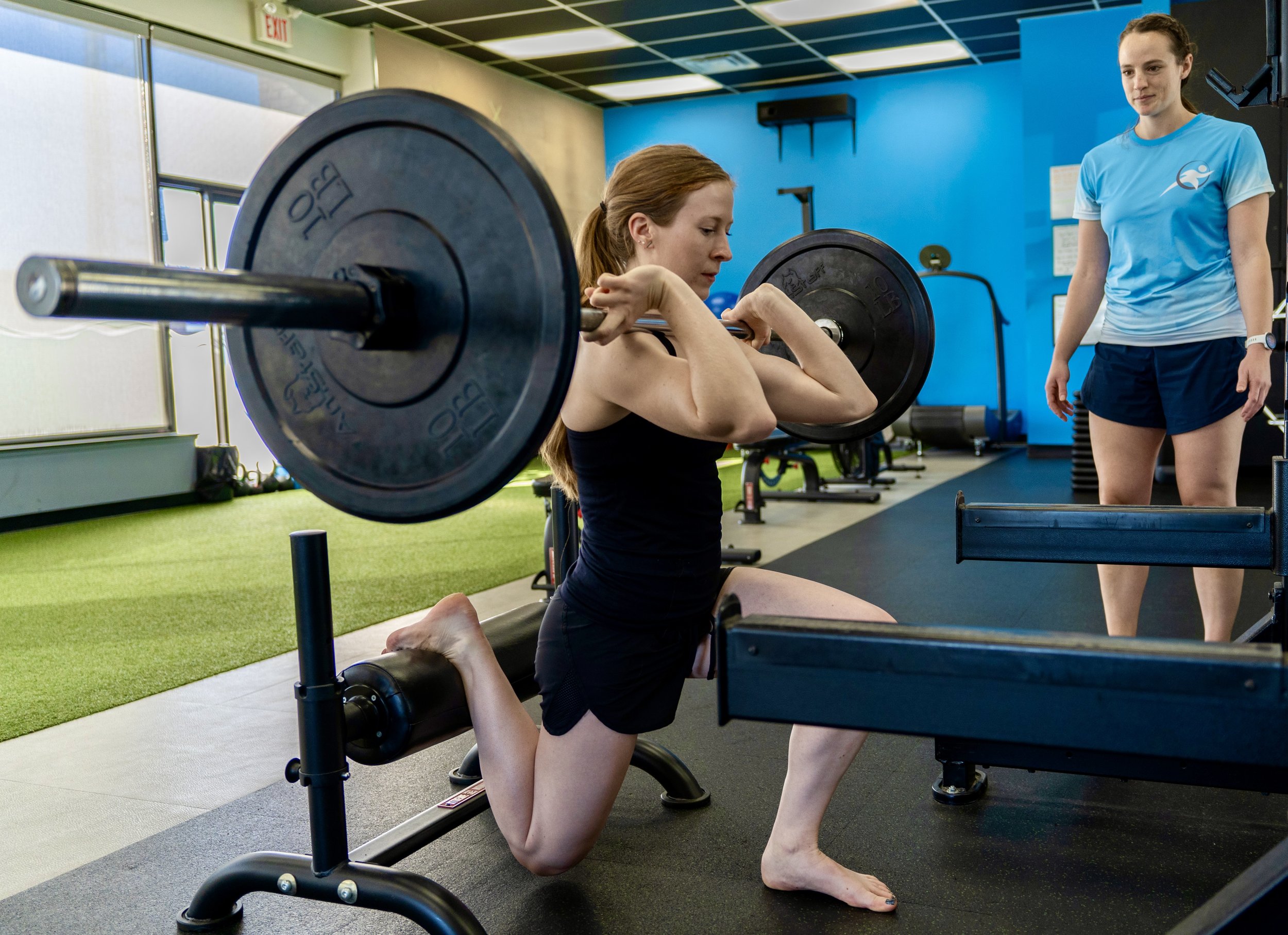
Life happens one leg at a time.
Walking.
Climbing stairs.
Changing direction.
Preventing falls.
That’s why unilateral training matters so much.
Lunges challenge:
balance
hip stability
coordination
knee control
core integration
They also reveal asymmetries that bilateral exercises often hide.
We carefully select lunge progressions based on the person’s current ability:
split squats
supported lunges
reverse lunges
step-ups
lateral patterns
The goal is not to make exercise harder for the sake of difficulty.
The goal is to challenge the body appropriately.
The Hinge: Protecting the Spine and Generating Power
The hinge teaches the body how to load the hips properly.
This is one of the most important movement patterns for protecting the lower back.
A strong hinge pattern improves:
posterior chain strength
glute function
spinal stability
lifting mechanics
resilience against injury
Most people bend through their spine instead of their hips.
We teach clients how to:
create tension
stabilize their core
maintain alignment
breathe properly under load
generate force safely
Because one poorly loaded movement can create months, or years, of discomfort.
The Squat: Earned From the Ground Up
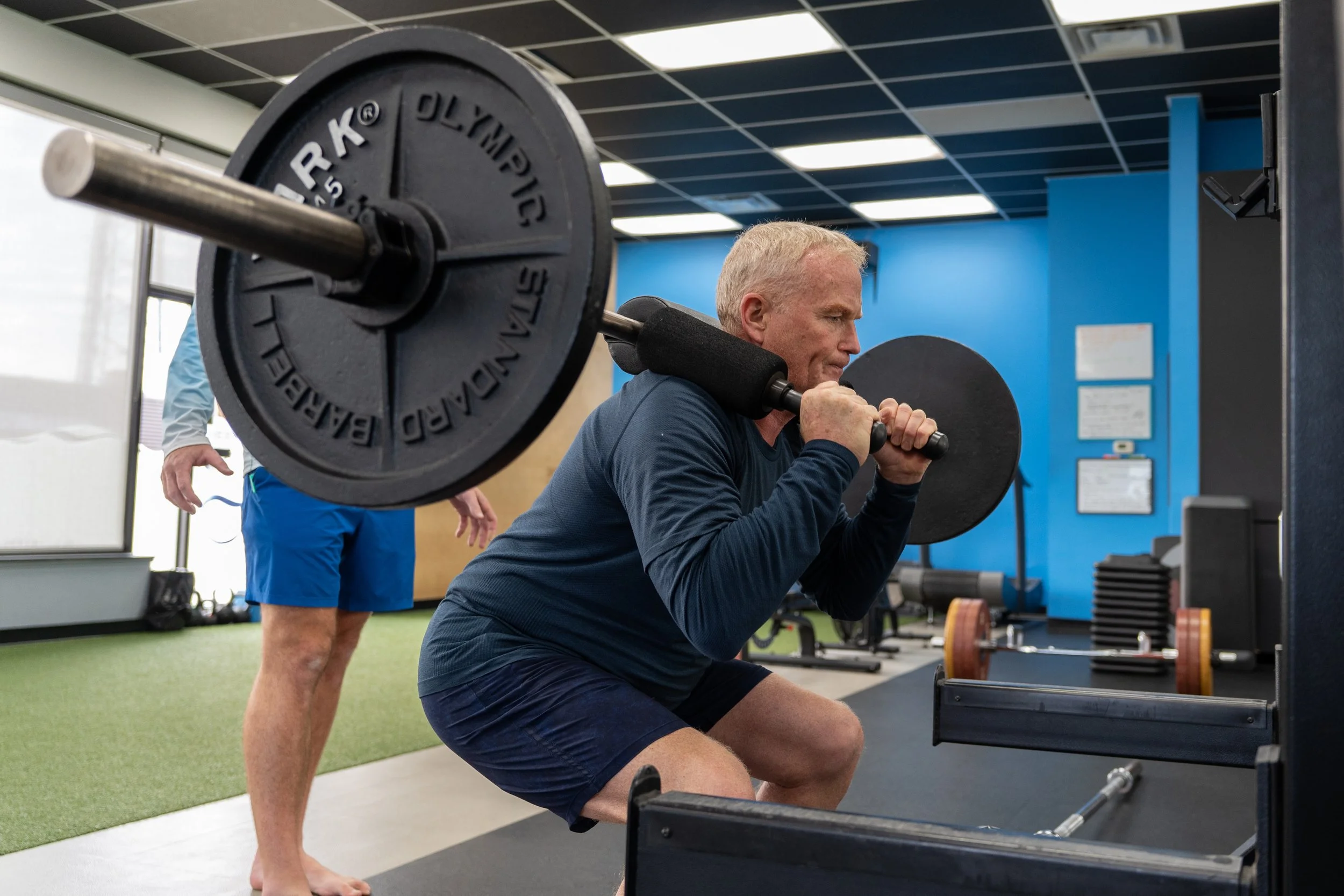
At Qi Movements, we do not simply tell people to squat.
We teach them how to earn the squat.
In fact, many of our clients begin learning the squat from the ground in a quadruped position using a progression called Squat Rocks before we ever ask them to squat standing.
Why?
Because the body must first learn:
hip positioning
spinal alignment
breathing cadence
pelvic control
weight distribution
stability through the feet and hips
This allows clients to feel the movement safely before adding gravity, load, and intensity.
From there, we progress strategically.
There is a checklist for every progression.
Before moving forward, the body must demonstrate:
control
stability
alignment
breathing integrity
coordination
You must check the boxes before your body is prepared to engage in higher levels of load and intensity.
This is how we create long-term resilience instead of short-term compensation.
Carries: One of the Most Functional Patterns We Train
Carries may be one of the most underrated exercises in fitness.
But they are deeply human.
Think about daily life:
groceries
luggage
backpacks
children
moving objects
Carries develop:
grip strength
posture
gait mechanics
spinal stability
breathing control
full-body integration
They teach the body how to stabilize while moving — which is exactly what life demands.
Where Function Meets Intensity
At Qi Movements, we are not afraid of intensity.
In fact, when the body is ready, we absolutely want people lifting heavier weights and becoming stronger.
That is where some of the greatest physiological benefits occur:
improved bone density
increased muscle mass
metabolic support
hormonal health
resilience
confidence
longevity
But intensity must be earned.
This is the sweet spot:
where function meets intensity.
If someone loses:
breathing cadence
spinal alignment
positional control
joint integrity
then the exercise becomes inappropriate for that individual at that moment.
That’s why every client at Qi Movements works with a coach who watches every single repetition.
We are constantly coaching:
breath
positioning
tempo
stability
tension
mechanics
This is how we prevent injury.
This is how we build robust, resilient bodies.
Foundation of Longevity
Longevity is not just about living longer.
It is about maintaining the ability to fully participate in your life.
To move well.
To feel capable.
To remain independent.
To stay strong and energized for decades to come.
That’s why movement quality matters.
At Qi Movements, we don’t just help people exercise.
We help people rebuild the foundation for the rest of their lives.
Ready to Move Better and Build a Stronger Foundation?
Start with our 3-Session Core Transformation Program.
We’ll assess how your body moves, identify limitations, and create a personalized roadmap designed around your body, your goals, and your lifestyle.
👉 Click Here to Book Your Free Discovery Call
Yours in wellness,
Brien & Dre
Qi Movements – Move well. Live well.™